Lithium batteries are classed as Class 9 dangerous goods, so lithium battery shipping works best when you classify the battery first, check the rules for each transport mode and plan the whole journey, including warehousing and returns, before you book.
Whether the batteries power consumer electronics, electric vehicles or renewable energy storage, the aim is the same: keep transport, storage and returns working together, so you protect people and products without avoidable disruption pushing up costs.
Not sure where to start? Talk to our team about your lithium battery shipping requirements.
What risks do lithium batteries present in transport?
Lithium batteries can pose a fire risk if they are damaged, short-circuited or mishandled. A key concern is thermal runaway, a self-sustaining rise in temperature within a battery cell. When you assess the risks and work out which requirements apply, consider:
- the battery’s chemistry, energy capacity and condition
- whether it is shipped on its own, packed with equipment or installed in equipment
- the route and the transport mode
A new battery pack, a battery installed in equipment and a defective return should not all be treated in the same way. Each needs an assessment that fits its circumstances, and that assessment confirms the classification and transport requirements before you book.
How are lithium batteries classified for shipping?
Start by confirming the classification for your lithium battery shipping. UN numbers identify the goods, but they are not complete shipping instructions.
| UN number | What it covers |
|---|---|
| UN3480 | Lithium-ion batteries shipped on their own |
| UN3481 | Lithium-ion batteries packed with, or contained in, equipment |
| UN3090 | Lithium metal batteries shipped on their own |
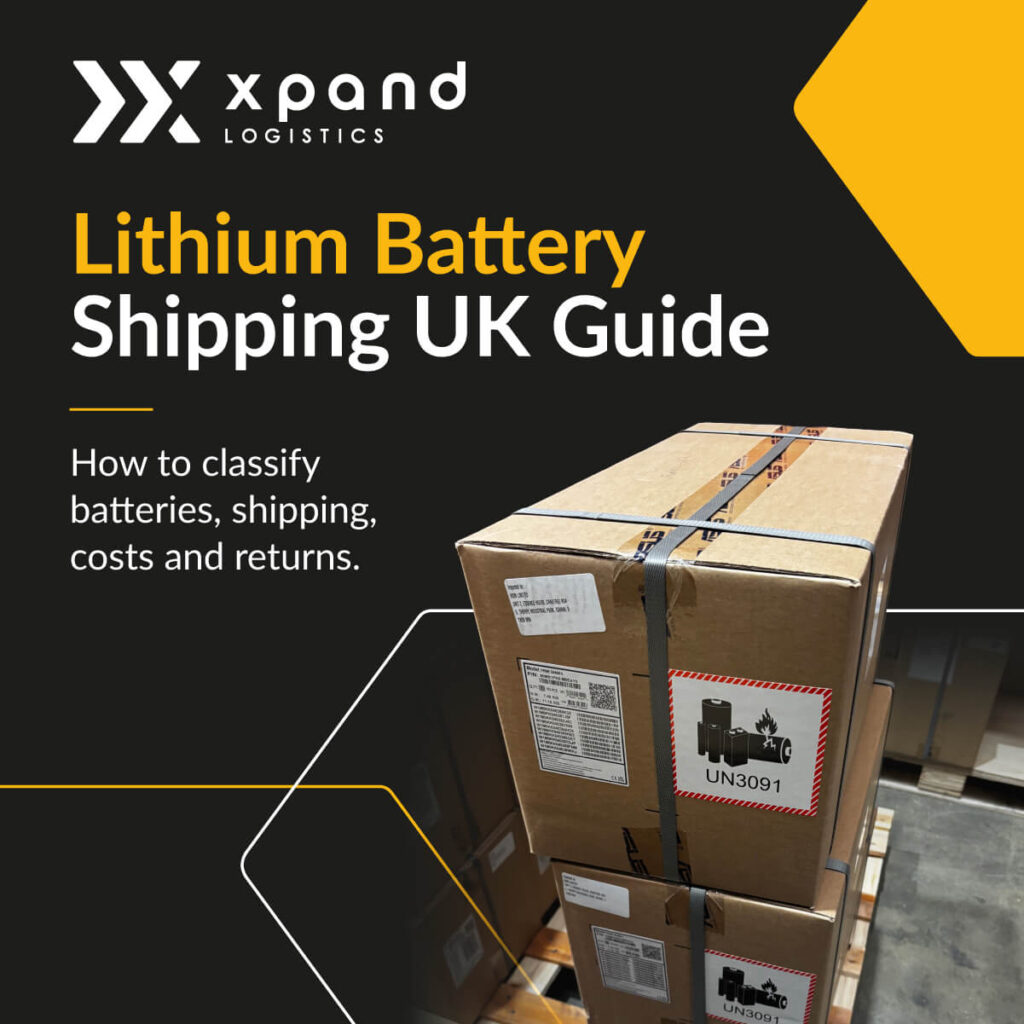
| UN3091 | Lithium metal batteries packed with, or contained in, equipment |
A Safety Data Sheet or dangerous goods fact sheet giving the product specifics will usually be required, along with evidence that the battery type has passed UN 38.3 testing.
Small cells and batteries that meet strict limits may be exempt from most requirements under ADR and IMDG special provision 188, although marking rules still apply. Air freight works differently, with its own packing instructions for smaller batteries, so check eligibility for each mode with a dangerous goods specialist rather than assuming an exemption carries across.
As the shipper, make sure the people who classify, pack, mark and document the shipment have dangerous goods training that covers the battery type and the transport mode.
What rules apply to lithium battery transport by air, sea and road?
Check every shipment against the current requirements for the relevant mode:
- Air: the IATA Dangerous Goods Regulations. Lithium-ion batteries shipped on their own (UN3480) can only travel on cargo aircraft and must be offered at no more than 30% state of charge. Since 1 January 2026, that limit is also mandatory for most lithium-ion batteries packed with equipment (UN3481), while for batteries installed in equipment it remains a recommendation. IATA publishes a lithium battery guidance document each year.
- Sea: the IMDG Code.
- Road: ADR, applied in Great Britain through the Carriage of Dangerous Goods regulations. Many businesses involved in carrying dangerous goods need to appoint a dangerous goods safety adviser.
- National and carrier requirements, which can be stricter than the international rules.
The individual consignment determines the packaging, marks, labels and documentation you need, as well as any state-of-charge restrictions. IATA updates its regulations every year, so confirm the edition in force on your dispatch date, and speak to a suitably qualified dangerous goods specialist before dispatch. Getting it right upfront helps you avoid cargo rejection, repacking and missed departures.
How do you keep lithium battery transport and warehousing joined up?
Once the compliance requirements are confirmed, look for a freight solution that balances your delivery deadline, shipment size, carrier acceptance and battery handling needs. Consider air freight, ocean freight, road freight and rail for each consignment rather than assuming every option will be available.
Keep the handovers between carriers, terminals and warehouses joined up too. Clear responsibilities, consistent shipment information and agreed procedures for exceptions make a big difference when something does not go to plan.
The same thinking applies to warehousing. Facilities need to suit the batteries and the activities involved, with trained personnel, appropriate risk controls and emergency arrangements in place. Storage conditions, including any temperature, humidity or shock monitoring, should follow manufacturer guidance and the assessed risks rather than a one-size-fits-all temperature range. Linking inbound deliveries, inventory and outbound dispatch within one plan helps protect product condition and gives you better visibility.
Why should you look beyond the freight quote for lithium battery shipping?
It is tempting to compare freight quotes on price alone, but that rarely tells the whole story. Start with a clearly defined service scope and agree responsibilities upfront.
Look at transport and warehousing alongside packaging, dangerous goods handling, customs services and insurance to understand the full cost. The lowest freight quote is not necessarily the lowest overall cost, especially if missed requirements lead to repacking, rebooking or delays.
A transport-only quote cannot be compared like for like with one that also includes packaging, dangerous goods handling, warehousing, customs services and insurance. Check what each proposal includes, what is charged separately and who arranges each element before comparing totals.
Want a like-for-like comparison? Send us your battery and shipment details and we will scope the full service with you.
How do you plan for returns, repairs and recycling?
The journey does not necessarily finish at delivery. Returns, repairs, refurbishment and recycling all need a clear route back through the supply chain, often called reverse logistics.
A returned battery may no longer be in the same condition as when it first shipped, so the transport requirements can change too. Damaged or defective batteries need specialist assessment before any movement is arranged. Planning return journeys in advance also supports responsible end-of-life management and the recovery of valuable materials, helping to keep resources within a circular supply chain.
What should you ask a lithium battery logistics partner?
Look for lithium battery shipping experience that matches your battery types, shipping configurations and destinations, and ask specific questions:
- How do you manage dangerous goods training and regulatory updates?
- Which carriers accept the shipments?
- Will the load need ADR-trained drivers, transport documents and written instructions in the vehicle?
- Are the warehouses suitable for my battery type?
- How will I track visibility?
- Who takes care of the documentation, and what happens if there is an incident or delay?
- Can the same provider support returns and recycling?
The answers tell you far more than a general promise of end-to-end capability.
What information do you need before asking for a lithium battery shipping quote?
Have three sets of information ready:
- Battery details: chemistry, energy capacity, condition, whether the batteries ship on their own, packed with equipment or installed in equipment, and supporting documents such as the Safety Data Sheet and UN 38.3 test summary.
- Shipment details: size, origin, destination and delivery deadline.
- Service requirements: any warehousing or returns needs.
Share these with your logistics partner and dangerous goods specialist so they can assess the consignment properly and agree the service scope with you. Then look at the whole journey, from dispatch through to recycling, and check how compliance, freight, warehousing and reverse logistics connect. A joined-up approach protects your products, keeps avoidable costs under control and builds a more resilient supply chain.
Plan your next lithium battery shipment with XPand Logistics
Planning lithium battery shipping? Speak to XPand Logistics. Our team can talk through your requirements, explore suitable options, confirm the service scope and provide a tailored quote.
Our services include warehouse solutions, dangerous goods shipping, bespoke cargo packing, and air, sea and road freight. Contact XPand Logistics today to get started.
FAQs
Lithium-ion batteries shipped on their own are UN3480, and those packed with or contained in equipment are UN3481. Lithium metal batteries are UN3090 on their own and UN3091 packed with or in equipment. The UN number identifies the goods but does not replace full shipping instructions.
Yes, when the shipment meets the IATA Dangerous Goods Regulations. Lithium-ion batteries shipped on their own (UN3480) can only travel on cargo aircraft, and the packaging, marks, labels, documentation and state of charge all depend on the individual consignment.
For air freight, lithium-ion batteries shipped alone must be offered at no more than 30% of rated capacity. Since 1 January 2026 the same limit is mandatory for most lithium-ion batteries packed with equipment, while for batteries installed in equipment it is a recommendation.
Not always. Small cells and batteries that meet strict limits may be exempt from some requirements, although marking rules usually still apply, and larger or higher-energy batteries are fully regulated. Which rules apply depends on the battery and the transport mode, so confirm with a dangerous goods specialist.
They need specialist assessment before any movement is arranged. Damaged or defective batteries carry higher risk and the requirements differ from those for new batteries, so some carriers and modes may refuse them.