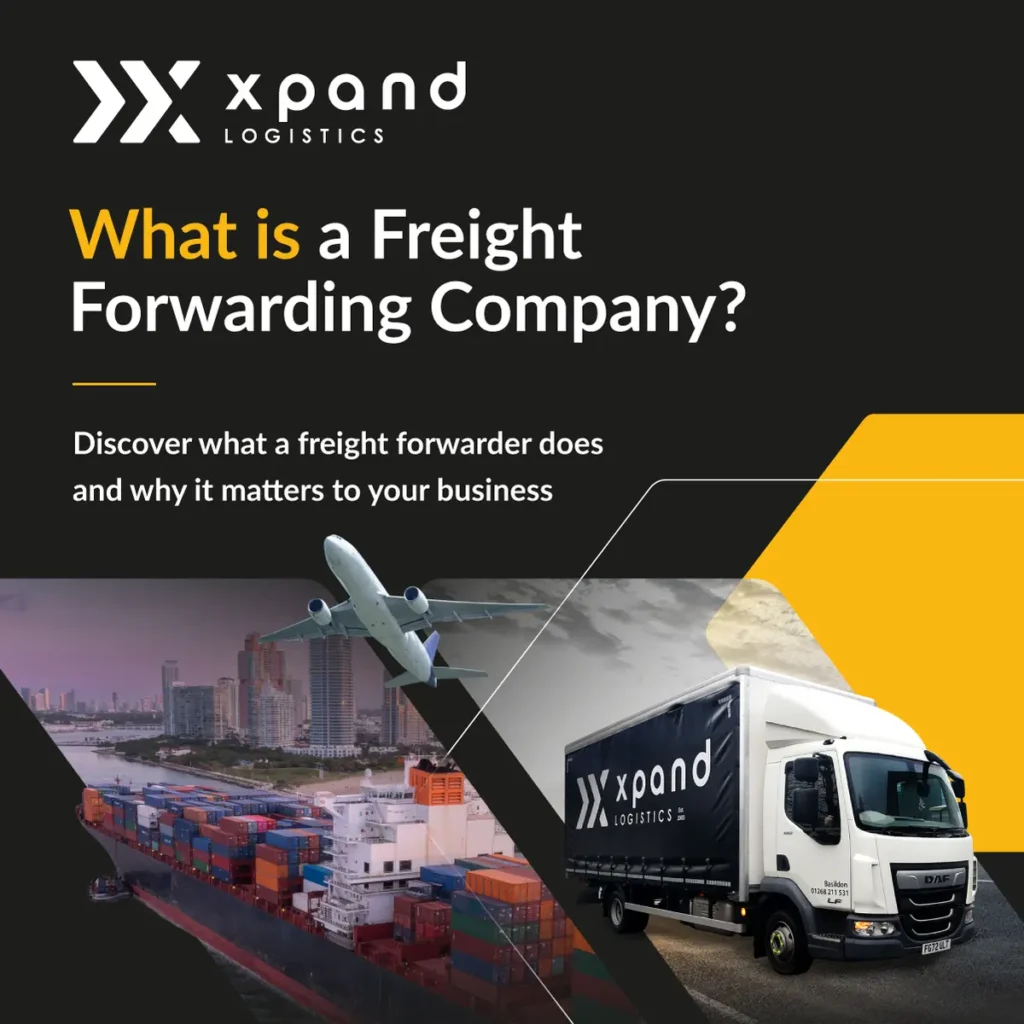
A freight forwarding company is a business that organises and manages the shipment of goods on behalf of importers and exporters, without necessarily owning the transport itself. Freight forwarders coordinate everything from documentation and customs clearance to booking cargo space with carriers, acting as the link between a business and the global shipping network.
For companies moving goods internationally, understanding exactly what a freight forwarder does, and how they differ from other logistics providers, can make it far easier to choose the right support for your supply chain.
What Does a Freight Forwarding Company Do?
A freight forwarding company acts as an intermediary, arranging the practical and administrative work involved in moving cargo from one location to another. This typically includes:
- Booking space with airlines, shipping lines, or haulage providers
- Preparing and checking shipping documentation
- Arranging customs clearance and compliance
- Consolidating smaller shipments to reduce costs
- Coordinating cargo insurance
- Tracking shipments and providing visibility throughout transit
Rather than handling every part of this themselves, businesses rely on a freight forwarder to manage the logistics chain, reducing administrative burden and minimising the risk of delays or compliance issues.
How is a Freight Forwarder Different from a Carrier?
A freight forwarder is not the same as a carrier. A carrier, such as an airline, shipping line, or haulage company, physically transports goods using its own vessels, aircraft, or vehicles. A freight forwarder, by contrast, is usually asset light. Instead of owning transport, forwarders use their industry relationships and expertise to book capacity with carriers on a client’s behalf.
This distinction matters because it is what allows freight forwarders to offer flexibility. Rather than being tied to one mode of transport, a forwarder can select whichever combination of air, sea, or road freight best suits a shipment, adjusting quickly if disruption occurs.
What Services Does a Freight Forwarding Company Typically Offer?
Most freight forwarding companies offer support across multiple transport modes and related services, including:
- Air freight for time sensitive or high value shipments
- Ocean freight, covering both full container loads (FCL) and less than container loads (LCL)
- Road freight, including full truck loads (FTL) and part loads
- Customs brokerage and documentation support
- Warehousing and third party logistics (3PL)
- Specialist handling for dangerous goods, out of gauge cargo, or sensitive items such as fine art
At XPand Logistics, our freight forwarding services span all these areas, giving businesses a single point of contact rather than needing to manage multiple providers.
Why Do Businesses Use a Freight Forwarding Company?
Businesses use freight forwarders because international shipping involves more complexity than most in-house teams can manage efficiently. A good freight forwarder brings:
- Established relationships with carriers, often securing better rates through consolidated volume
- Up to date knowledge of customs regulations and international trade compliance
- A single point of contact for shipments involving multiple transport modes
- Support that can scale as shipment volumes and destinations grow
For growing businesses, this means logistics can expand alongside operations, without the need to build specialist in-house expertise from scratch.
To Summarise
A freight forwarding company plays a central role in international trade, coordinating the movement of goods so businesses do not have to manage every carrier, customs form, and transport leg themselves. Understanding what a freight forwarder does, and how the role differs from a carrier or logistics provider, is the first step to building a more efficient supply chain.
For businesses looking for experienced freight forwarding support, contact our team to find out how XPand Logistics can manage your shipments across air, sea, and road.
FAQs
No. A shipping line is a carrier that owns and operates vessels, while a freight forwarder arranges bookings with carriers on behalf of its clients.
Any business shipping goods internationally can benefit from a freight forwarder, particularly where customs, documentation, or multiple transport modes are involved.
Freight forwarding is often one part of a wider logistics offering, which can also include warehousing, distribution, and supply chain management.